
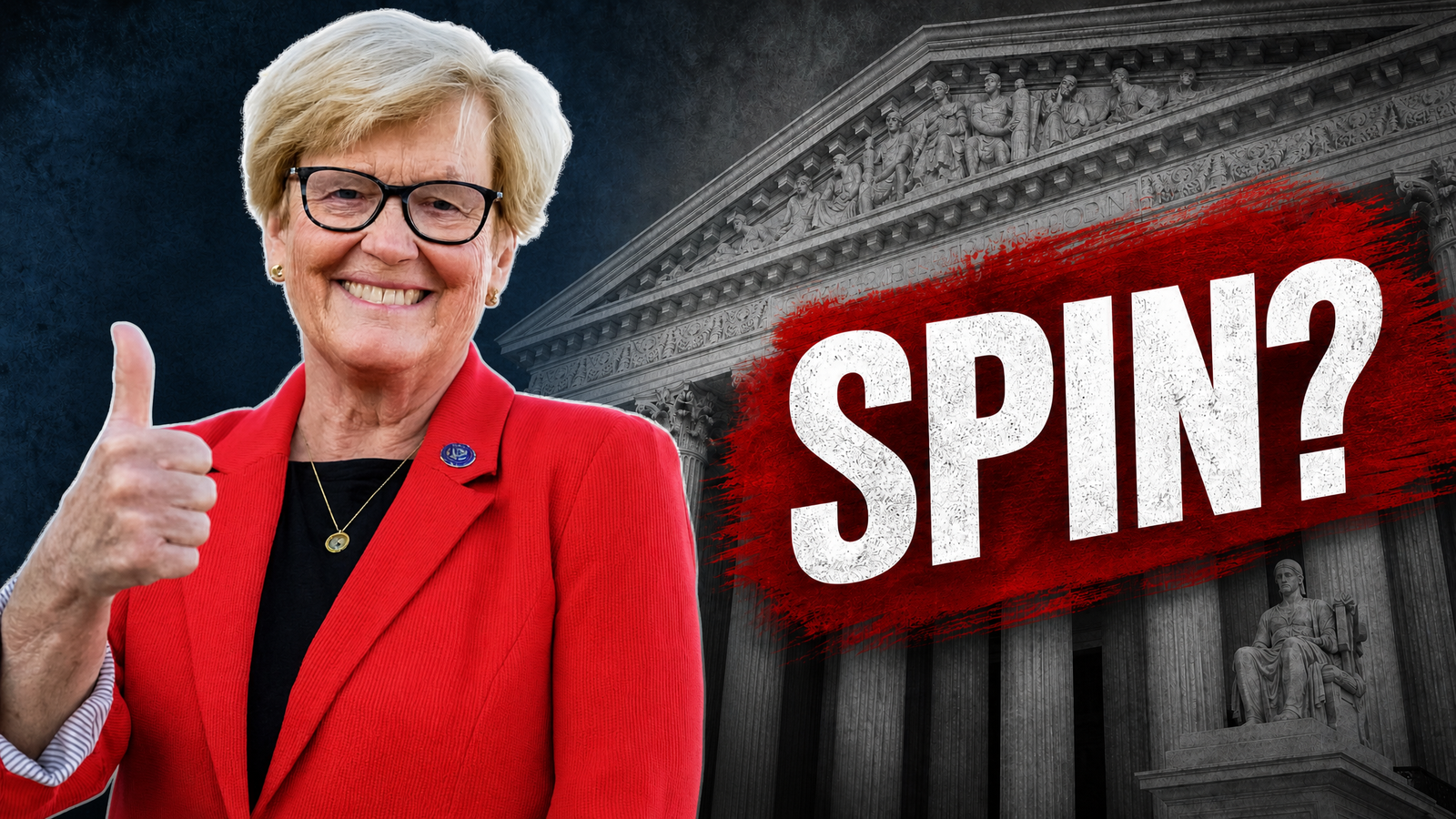
Maine’s Sen. Susan Collins was among the four Republicans to vote against a proposal to attach a version of the Safeguarding American Voter Eligibility (SAVE) America Act to a $70 billion funding package for Immigration and Customs Enforcement (ICE) and Border Patrol (CBP).
Later in the day Friday, the Senate voted 52-47 in support of the funding without receiving any Democratic support.
The House is not expected to consider this spending package until next week at the soonest.
Earlier this year, lawmakers partially funded DHS but deliberately excluded ICE and CBP after they failed to garner enough support to advance.
Among the many amendments to the ICE and CBP funding package that were rejected by the Senate Friday was the proposal to include a version of the SAVE America Act as part of the legislation.
The SAVE Act was first put forward in 2024 by a large group of Republican lawmakers with the purpose of protecting the integrity of U.S. elections in light of the surge in illegal immigration.
Under the proposed law, those seeking voter registration would need to provide “documentary proof of United States citizenship,” such as a REAL ID compliant form of identification, passport, military ID, or a government-issued photo ID “showing that the applicant’s place of birth was in the United States.”
Other government-issued photo IDs may be used if presented in conjunction with another qualifying document, such as a birth certificate or naturalization certificate.
Several versions of this bill have been considered, however, meaning that each one takes a slightly different approach to achieving the measure’s stated goals.
This is not the first time that lawmakers have pushed back on including a version of the SAVE Act as part of a broader spending bill.
In September of 2024, the possibility of including the measure as part of a major spending package was discussed but ultimately did not come to fruition.
The version of the package that included language from the SAVE Act was rejected by both Democrats and Republicans.
While those on the left were united in their opposition to the package, a number of those on the right joined them over concerns related to the use of a stop-gap measure itself and its inclusion of “excessive spending.”
Collins has previously said in an exclusive comment to the Maine Wire earlier this year that she supports the House-passed version of the SAVE Act, saying the revised bill strikes the right balance between election security and voter access.
She said that she will back the version of the SAVE Act that cleared the House, calling it a “simple reform” aimed at strengthening confidence in federal elections.
“The law is clear that in this country only American citizens are eligible to vote in federal elections,” she said. “In addition, having people provide an ID at the polls, just as they have to do before boarding an airplane, checking into a hotel, or buying an alcoholic beverage, is a simple reform that will improve the security of our federal elections and will help give people more confidence in the results.”


0 Comments