
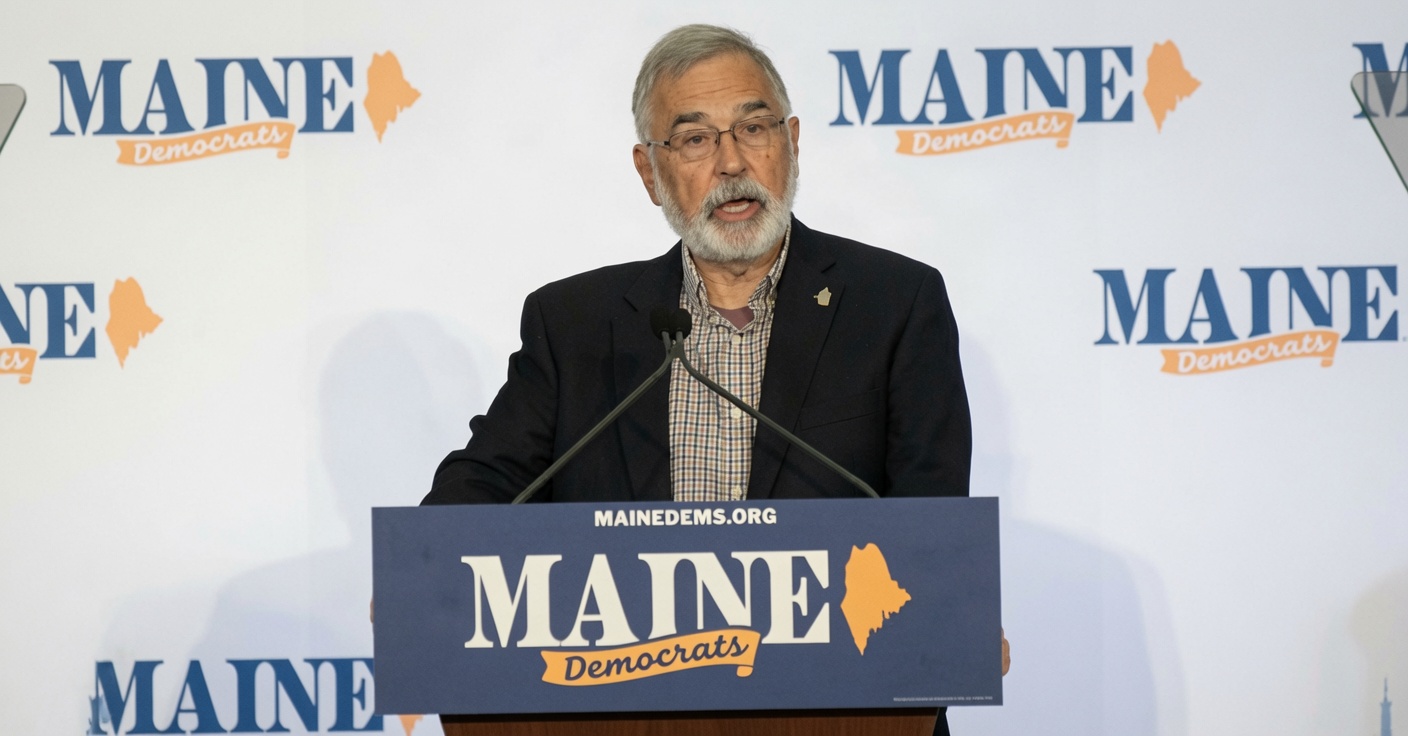
Maine Attorney General Aaron Frey has responded to the United States Supreme Court’s decision to uphold state laws barring biological males from playing on female-only sports teams.
“Today’s ruling, while predictable, is yet another disturbing affront to personal liberties by providing states with a license to discriminate,” wrote Attorney General Frey in a statement Tuesday.
“The Court was clear that this decision had no bearing with respect to a state’s choice to include transgender athletes and as such, will not implicate the Department of Justice’s case against Maine,” he said. “We will continue to defend Maine’s law.”
Click Here to Read Attorney General Frey’s Full Statement
The case brought before the Court stemmed from challenges filed by two students who were barred from playing on female sports teams under state law in West Virginia and Idaho because they are biologically male.
According to Map Research, 25 additional states have similar bans already in place.
In light of this ruling, these laws requiring that eligibility for athletic participation be determined on the basis of biological sex will be allowed to stand, and similar policies may be adopted in more jurisdictions going forward.
States will still have the option, however, of not establishing such a requirement if they so choose.
“Separate sports teams for biological males and biological females are reasonable: Given the inherent physical differences between the sexes, allowing only biological females to play on women’s and girls’ teams can reduce the risk of physical injury and ensure fair competition,” wrote Justice Brett Kavanaugh on behalf of the majority.
Justice Kavanaugh closed the opinion by emphasizing that the ruling is not intended to be derogatory towards transgender athletes.
“No student-athlete on either side of the issue, whether a biological female or transgender, deserves to be ostracized or vilified,” he wrote.
Justices Clarence Thomas and Neil Gorsuch each offered concurring opinions in which they expounded upon their own beliefs concerning the questions presented to the Court beyond that which was discussed in the majority opinion.
Justice Sotomayor authored an opinion which represented a partial dissent and a partial concurrence that was co-signed by Justices Kagan and Jackson.
“Because of the Court’s decision today, West Virginia, and any other state actor, can deny [the plaintiff] and others like her these experiences simply because it thinks they have an inherent athletic advantage, even if the facts show that they do not,” Sotomayor wrote. “Sports, of course, are often zero sum, but the law need not and should not be.”
Jackson also authored a partial dissent and a partial concurrence of her own in which she elaborated upon her stance against the construction of Title IX as referring strictly to biological sex.


0 Comments