
Children in Maine were found to have some of the worst education outcomes in the nation according to the latest edition of the Kids Count Data Book.
Health outcomes were middling, while economic and family and community metrics were some of the strongest in the country.
Taken together, Maine children were found to have the 21st best overall well-being in comparison to kids in other states, a drop from last year’s ranking of 17.
Maine was found to have the steepest overall decline since 2019 of any state in the nation, followed by Nebraska, North Dakota, Iowa, and Minnesota.
This report is published by the Annie E. Casey Foundation, a philanthropic organization based in Baltimore that focuses on “developing a brighter future for millions of children and young people with respect to their educational, economic, social and health outcomes.”
Academic outcomes for Maine students are poor not only in comparison to other states, but also in relation to Maine children just a few years ago, experiencing one of the most dramatic drops in the country since 2019.
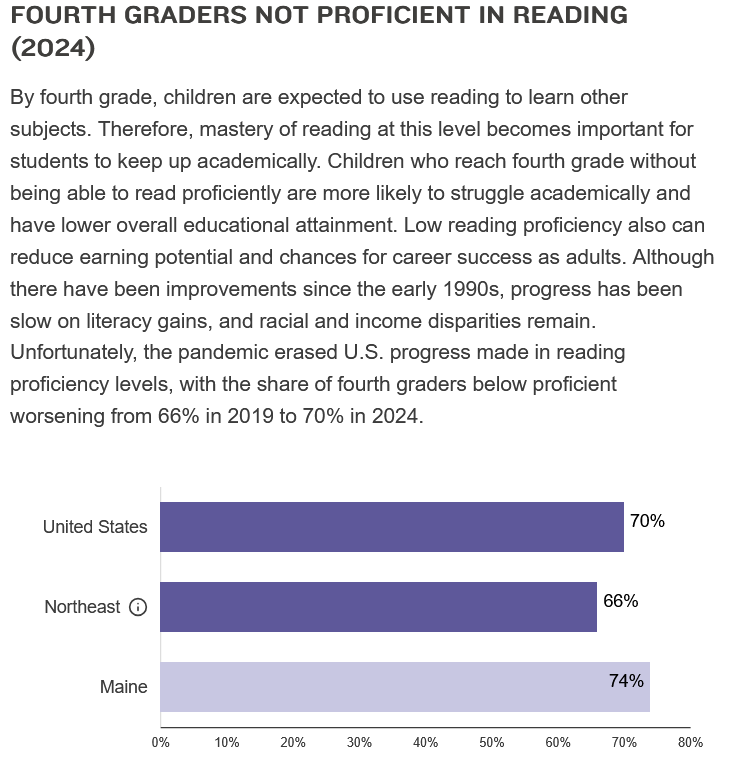
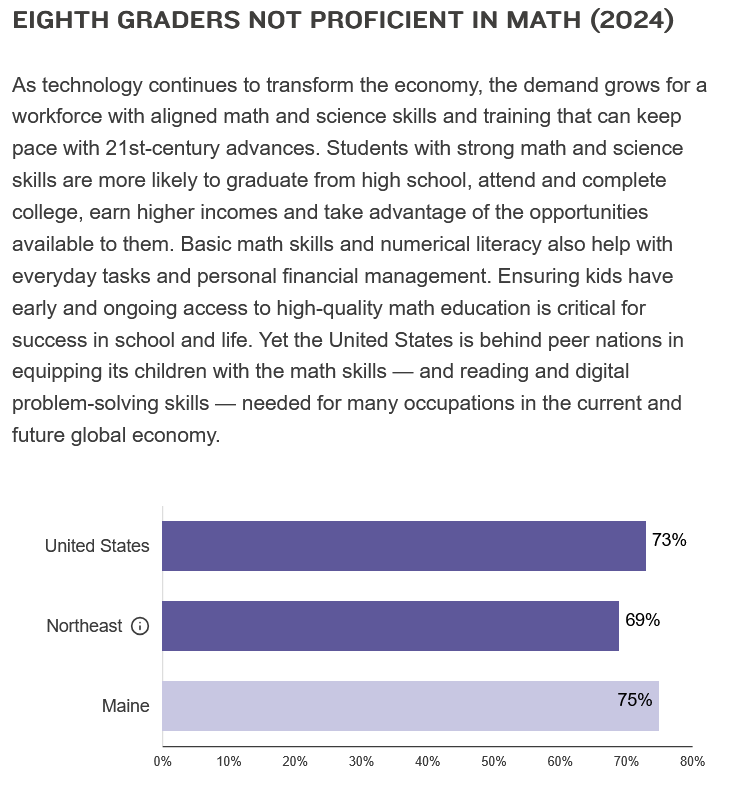
Approximately three-quarters of fourth graders were found to be not proficient in reading, as the same share of eighth graders were not proficient in math.
Both of these statistics have worsened since 2019, when they were at 64 percent and 66 percent respectively.
In both cases, Maine students are performing worse than their peers in the Northeast and nationwide.
When these and other metrics, including on-time high school graduation rates and the share of children ages three and four that are not yet in school, Maine ranked 41st nationwide.
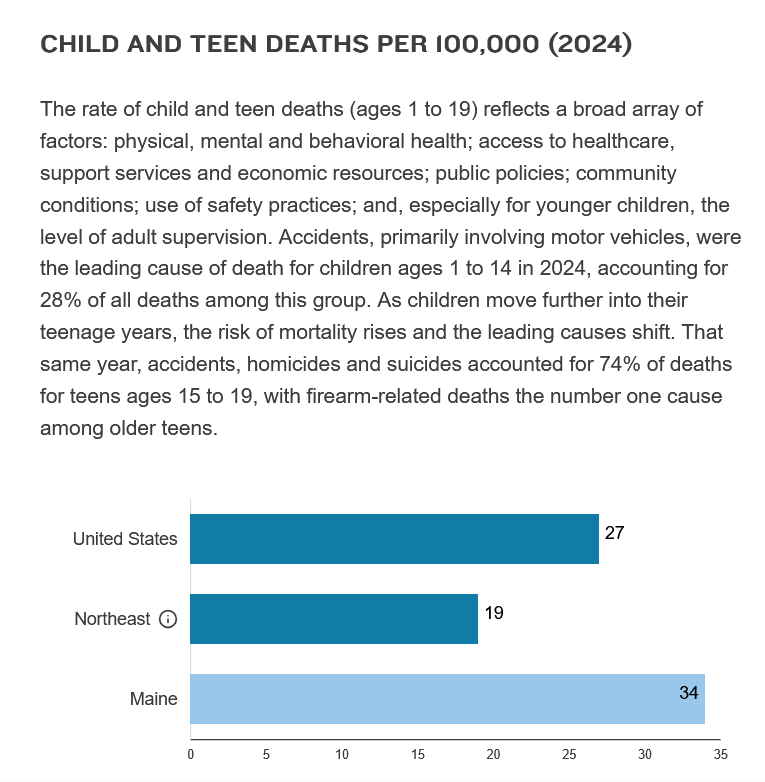
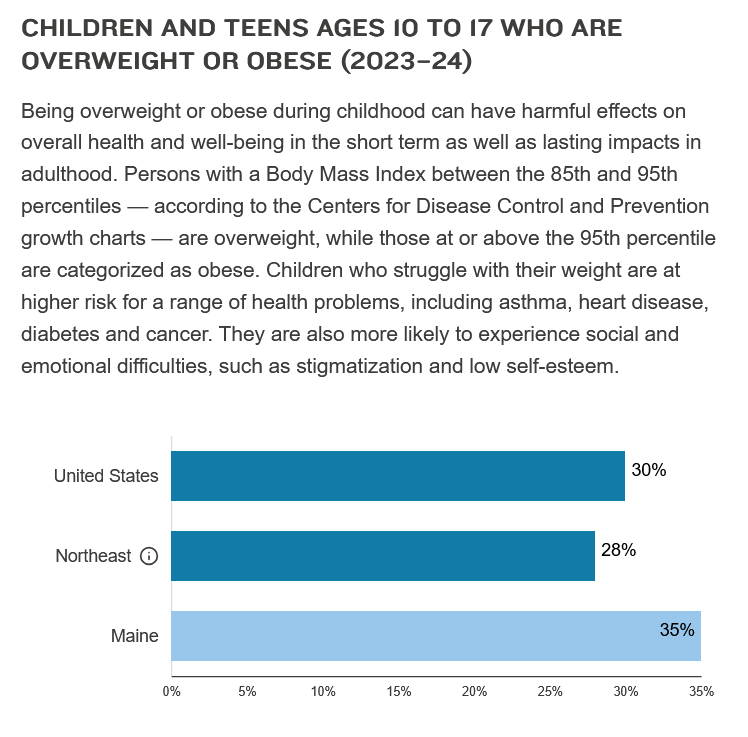
Maine and Mississippi were found to have the most significant degree of decline with respect to children’s health metrics over the past few years.
Based on factors such as the prevalence of low-birth-weight babies, the share of children and teens who are obese, and per-capita child and teen deaths, Maine ranked in the bottom half of the country, coming in 28th.
Maine did, however, improvement in its comparative standing with respect to family and community, as well as economic well-being, coming in 6 and 12 respectively.
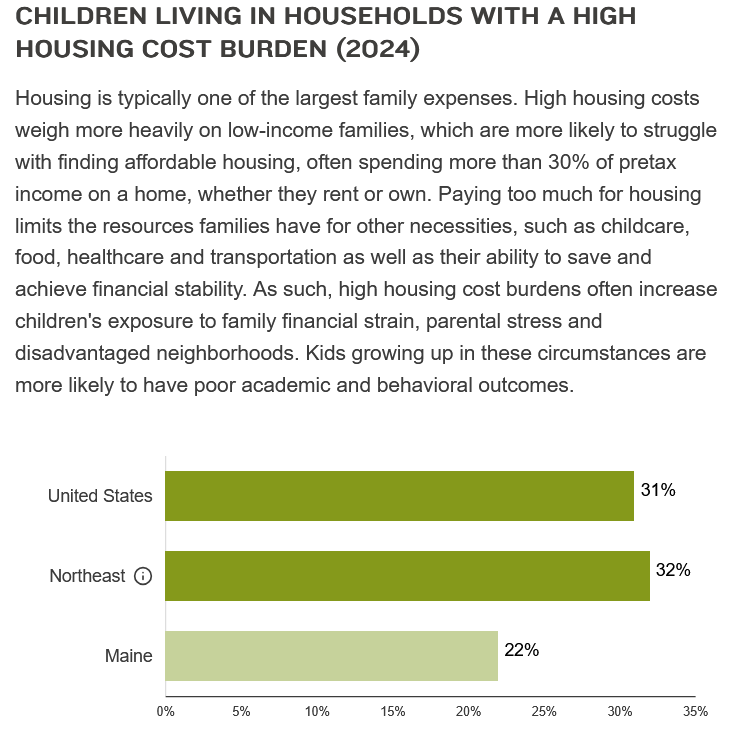
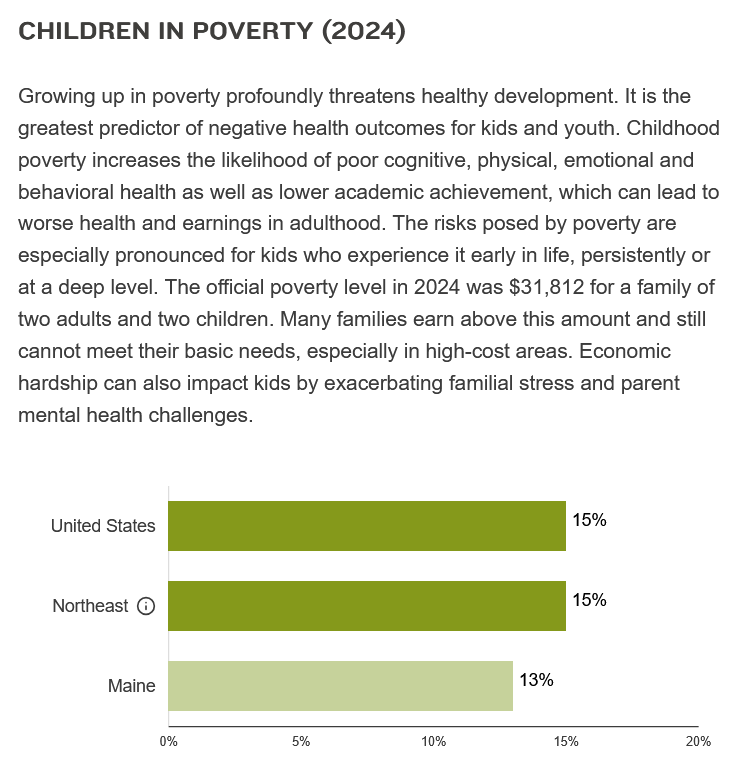
Factoring into the state’s economic well-being score were statistics such as the share of children living in households with a high housing cost burden and the number of children living in poverty.
By both of these measures, Maine children fare notably better than their counterparts in the Northeast and nationwide.
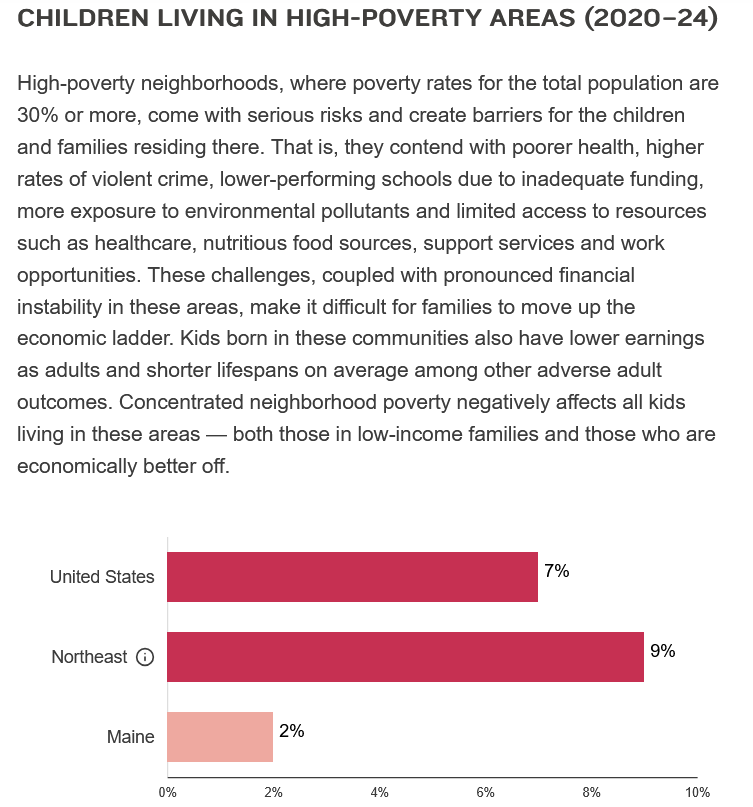
Maine also has a very low share of children living in high-poverty areas compared to other states in the Northeast and throughout the country.
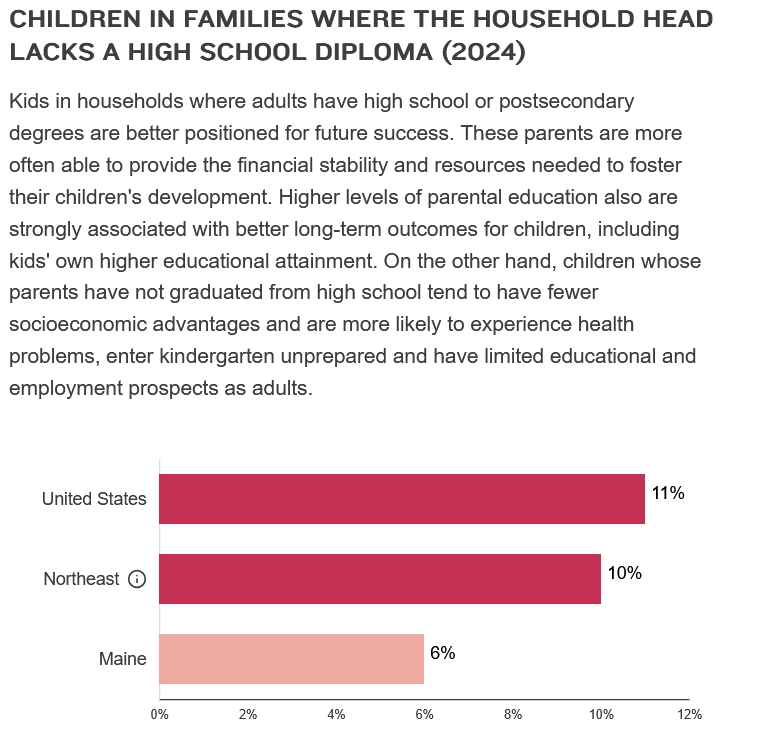
There were also a significantly smaller share of children living in households where the head lacks a high school diploma, coming in at nearly half the rate nationwide.
Both of these figures factored into the state’s notable 6th place ranking for economic well-being.
Click Here to Read Maine’s Full Results from the 2026 Kids Count Data Book





0 Comments