
As many as 40 percent of the noncitizens present in Maine, including those who entered the U.S. illegally and those with legal alien status, may have voted in the 2024 elections or had votes cast in their names, according to records obtained and reviewed by the Maine Wire.
That figure is based on a collection of MaineCare records obtained by the Maine Wire, as well as voter data from the Central Voter Registration (CVR) system maintained by Maine’s Secretary of State. While the MaineCare records show the individual’s immigration status, date of birth, and home address, the CVR records show when they registered to vote and whether they voted in a given election.
Taken together, the MaineCare records and CVR data offer the first public proof that noncitizens have been illegally registered to vote in Maine and are illegally voting or having illegal votes cast in their names in potentially large numbers.
Previously, the Maine Wire reported in October that MaineCare and CVR records related to 18 noncitizens revealed that six of the individuals were registered to vote, and five had votes cast in their names since 2016.
Editor’s Note: Since the publication of the Maine Wire’s original investigation into noncitizen voting, we have offered the opportunity to review our underlying records in person to both Republican and Democratic elected officials. While no Democrats have accepted our offer, several Republicans have, and they can attest to the veracity and accuracy of our reporting. We have also shared redacted but sensitive versions of the records underlying this reporting with the Bangor Daily News, the Maine Monitor, WGME, and any other media outlet that has requested proof of the assertions made in our reporting. The information shared with these outlets is more than enough for them to prove for themselves that noncitizens are registered to vote in Maine.
None of these news outlets have filed reports of their own based on those records.
We have taken this approach toward sharing proof of our reporting while simultaneously refusing to turn over the records to Maine’s Attorney General and Secretary of State in order to protect the identity of any source(s). We have also declined to turn over our records to agents of the state in order to protect the identities of the noncitizens who may, in fact, themselves be victims of a form of identity theft. We understand the gravity of the facts conveyed in these reports and have taken unusual and extreme measures to prove that our reporting is accurate and true.
Since the original report, the Maine Wire has acquired additional MaineCare records and cross-referenced those with CVR voting records as well to determine that 40 percent of the sample is registered to vote illegally. In total, the Maine Wire has identified ten noncitizens who are registered to vote out of a total population of 25 noncitizens enrolled in MaineCare.
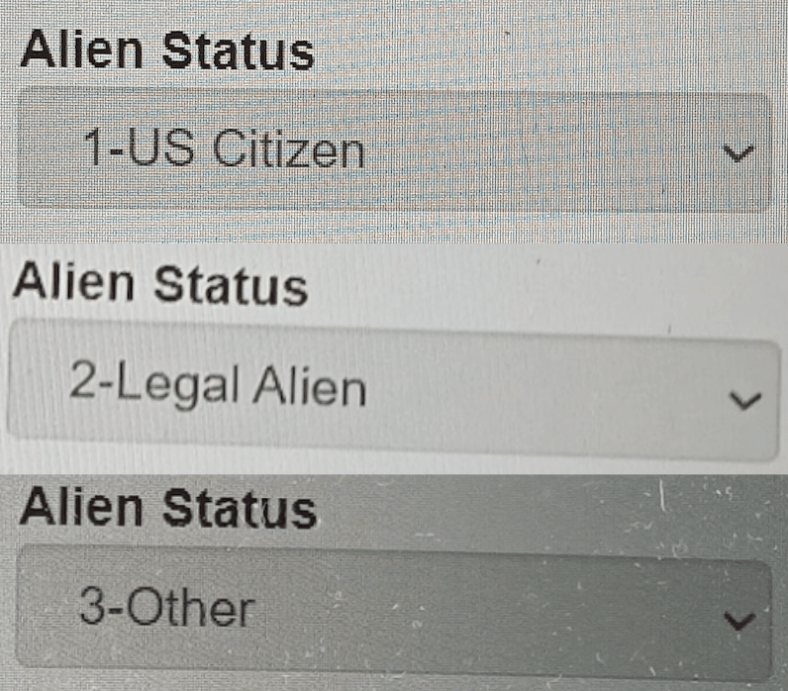
The MaineCare records denote “Alien Status” according to three options: 1- US Citizen, 2-Legal Alien, or 3-Other.
The first category includes both natural-born and naturalized U.S. citizens, while the second category includes lawfully present refugees, Green Card holders, approved asylum applicants, Temporary Protected Status (TPS) holders, and other classes of legal immigrants.
The third status includes unapproved asylum applicants on parole, illegal aliens, and other noncitizens who lack legal authorization to be present in the U.S.

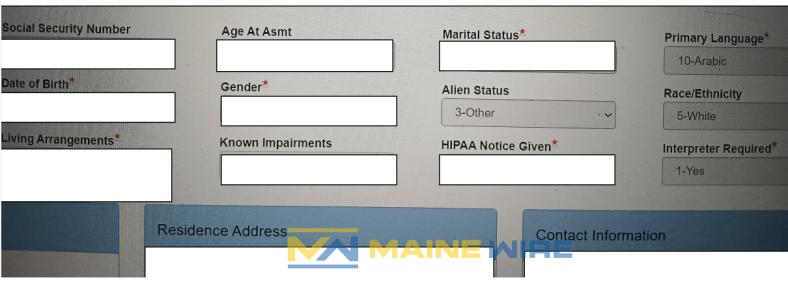
All noncitizens in the second and third categories, including those with permission to work and live in the U.S. permanently, should be ineligible to register to vote or cast a ballot.
Yet, ten of those individuals are registered to vote, and eight have had votes cast in their names since 2016, according to data from Maine’s Secretary of State.
None of the noncitizens voted in elections prior to 2016.
Under Maine law, it is a crime for a noncitizen to register to vote and a crime for them to knowingly cast a vote. Maine law also criminalizes the act of assisting a person with registering to vote or casting a vote if that person knows the individual they are assisting is a noncitizen who is ineligible to vote.
In addition to state laws and penalties, noncitizens who register to vote or knowingly vote in U.S. elections may face federal penalties, including fines, imprisonment, and potential deportation.
The CVR data for the 2024 election has yet to be updated, so it’s impossible to tell whether the noncitizens identified in the MaineCare records, including both illegal aliens and legal aliens, voted in the most recent presidential election. At least one of the individuals, an illegal alien with severe cognitive impairments, is recorded as registering to vote as a Democrat and casting a ballot in the 2024 Democratic primary.
The full extent to which noncitizens are registering to vote and actually voting in Maine elections is unknowable without broader access to datasets maintained by state and federal government agencies.
Thus far, Maine Attorney General Aaron Frey (D) and Secretary of State Shenna Bellows (D) have refused to take any steps toward investigating the evidence of election crimes, apart from asking the Maine Wire to turn over records that would expose a whistleblowers identity to recriminations by the state.
The Maine Wire has declined to turn over the records to Attorney General Frey and Secretary Bellows in order to protect sources as well as potential victims of identity theft. However, because all of the records in question are state records already in possession of the state, nothing is preventing Gov. Janet Mills (D), Frey, or Bellows from working with Maine’s Department of Health and Human Services to investigate noncitizen voting and identify the scale of the election crimes occurring in the state.
Governor Mills has said nothing about the evidence of election crimes, other than to falsely claim that the Maine Wire’s refusal to turn over the state records in our possession is preventing the state from investigating those election crimes.
In the absence of a government investigation using the full MaineCare dataset, the only method for assessing the potential scope and scale of illegal noncitizen voting is to extrapolate from the available records. That means using the 40 percent rate from the (admittedly non-random) sample obtained by the Maine Wire and applying it to the total population of noncitizen voters in Maine, as measured by the U.S. Census Bureau’s American Community Survey (ACS) data.
According to 2022 ACS data, there were 20,137 noncitizens over the age of 18 living in Maine, including 7,659 in Maine’s northern congressional district (ME-CD2) and 12,478 in Maine’s southern, coastal congressional district (ME-CD1).
Since these numbers rely on data self-reported to the ACS and are from 2022, these figures are likely a significant undercount of the total noncitizen population in Maine, especially considering the historic waves of noncitizen migration the U.S. and Maine have experienced under President Joe Biden and Governor Mills. But even with those low-end estimates of the 18+ noncitizen population in Maine, the potential number of noncitizens who are illegally registered to vote is large.
If the voter registration rate observed in the MaineCare records of noncitizens holds true across Maine’s entire population of noncitizens, then that means Maine has more than 8,000 noncitizens who are illegally registered to vote and may have voted illegally or had votes cast illegally in their names.
That may seem like a small number in a state where more than 800,000 adults voted, but it’s a large enough number to have potentially proven determinative in several small state legislative races—often settled by less than 100 votes—as well as Maine’s highly competitive Second Congressional District race.
In Maine’s Second Congressional District, Democratic U.S. Rep. Jared Golden received more votes than former State Rep. Austin Theriault (R-Fort Kent), with a victory margin of just 2,706 votes after the Ranked Choice Voting tabulation was complete.
If 40 percent of the 7,659 noncitizens in CD2 were registered to vote and voted or had votes cast in their names, that would amount to 3,064 illegal ballots cast in the election.
Again, those estimates of the noncitizen population are almost certainly undercounts, as they rely on older U.S. Census Data, self-reported surveys, and likely do not include noncitizens who are present in Maine illegally.
Although Maine’s CVR data can show whether an individual is registered to vote and whether they voted in a given election, the data do not show how an individual voted. That means it’s impossible to say whether the large population of noncitizen voters tipped the scales in favor of one candidate or the other in a given race. For example, it could be the case that more than 3,000 noncitizens cast votes in favor of Theriault because they’re huge NASCAR fans or were persuaded by his endorsement from President-elect Donald Trump.
However, the party registration data do offer a hint as to how the noncitizens may be voting.
Of the eight noncitizens who have voted in Maine elections since 2016, six are registered with the Democratic Party, and two are unaffiliated. One noncitizen registered to vote in June 2024 as a Democrat and voted in the primary election, but the data that would show whether they voted in the 2024 general election is not publicly available yet.
Although the noncitizen voters uncovered by the Maine Wire are mostly concentrated in Portland and Lewiston, the records also include noncitizen individuals from Biddeford, Saco, and Westbrook. Almost all of the individuals identified in the Medicaid records and CVR records list addresses that correspond to public housing facilities.
Many of the noncitizen individuals who have registered to vote or had votes cast in their names are described in their MaineCare records as having severe intellectual disabilities, raising questions about how they managed to register to vote and who might have assisted them with the process—an action that would have violated both state and federal law.
In addition to the violations of state and federal election laws evidenced by the records, the MaineCare patient files also show that a small subset of noncitizens is consuming a substantial volume of healthcare resources, both in terms of MaineCare dollars and the time of medical offices and professionals.
The following screenshots demonstrate the nature of the records obtained by the Maine Wire, as well as the information about noncitizen MaineCare usage that can be discerned from those records. We have redacted specific dollar amounts, diagnoses, treatment descriptions, and other information to protect the identities of the individuals in question.


As Maine approaches the beginning of the 132nd Legislature, the state is facing a nearly $1 billion budget shortfall, a deficit created by a combination of declining revenue forecasts and massive overspending. Because federal rules do not allow states to use Medicaid to pay for the medical expenses of noncitizens, states like Maine that choose to offer Medicaid (also known as MaineCare) services to noncitizens must cover the costs through general fund revenues rather than through federal reimbursements.
Keep in mind that the records in this report do not show the total dollar amount of MaineCare benefits consumed by a given individual. These records show only MaineCare benefits provided by a single provider. These records also do not show other MaineCare-funded services, such as translation services, prescription drug expenses, and transportation services.
Furthermore, Maine’s Department of Health and Human Services uses a process known as “Categorical Enrollment,” which means that eligibility for MaineCare is used as the basis for enrollment in other welfare programs that an individual may also be eligible for, such as the Supplemental Nutrition Assistance Program (SNAP or Food Stamps), General Assistance (a municipally administered, voucher-based welfare program), and Temporary Assistance for Needy Families (TANF, a cash-based welfare program). Depending on their alien status, some individuals may also be eligible for Refugee Cash Assistance (RCA), a federally funded benefit administered by the Office of Refugee Resettlement. Lastly, the majority of the addresses listed in the MaineCare records and CVR system data correspond with subsidized low-income housing, suggesting that taxpayers are funding the housing costs for these individuals as well as their medical care.
For more information about noncitizen voting in Maine, you can read the Maine Wire’s earlier reporting on the topic here:
- Exclusive: Records Show Votes Cast Under Names of Non-Citizens in Multiple Maine Elections Since 2016
- Top Maine Democrats Decline to Investigate Full Scope of Legal and Illegal Aliens Voting in Maine’s Elections
- Maine Attorney General, Secretary of State Ask Maine Wire for State Records Showing Non-Citizen Voting
- Why the Maine Wire Won’t Turn Over Records Proving Non-Citizens Are Voting in Maine’s Elections
- Progressive Nonprofit Brags About Handing Out Voting Guides to Noncitizen Immigrants in Left-Wing Media
- Mills, Bellows Cozy with Progressive Group ‘Studying’ Noncitizen Voting in Maine
- The Blob: Maine Wire Exposes Non-Citizen Voting and Election Vulnerabilities Created by Paroled Illegal Aliens





0 Comments