No Results Found
The page you requested could not be found. Try refining your search, or use the navigation above to locate the post.

February 04, 2026
Mother Teresa | Articles
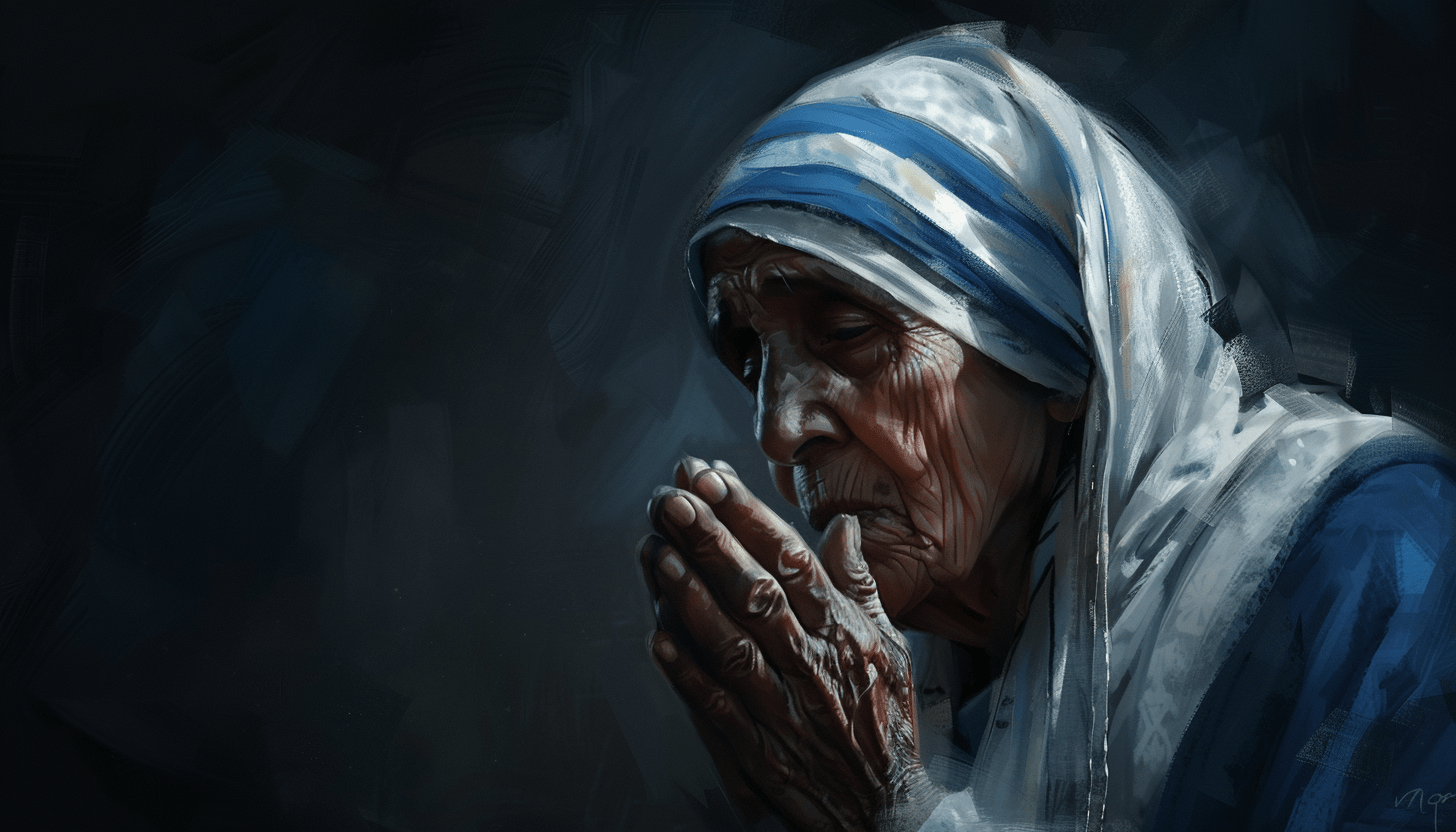 Mother Teresa, born as Anjezë Gonxhe Bojaxhiu on the 26th of August, 1910, was a paragon of compassion and altruism, whose life’s work transcended the mere act of charity to embody the very essence of humanitarian ethos. She embarked upon her ecclesiastical journey at an early age, joining the Sisters of Loreto in Ireland before relocating to India, where she would inaugurate her mission that would ultimately coalesce into the foundation of the Missionaries of Charity in 1950. This congregation was predicated on the principles of aiding those mired in the depths of destitution and affliction, providing solace to the indigent, diseased, orphaned, and dying whilst operating under a vow of absolute poverty, chastity, obedience, and wholehearted free service to the poorest of the poor. Her endeavours were not merely acts of philanthropy but rather a manifestation of her profound spiritual conviction towards serving Christ through these marginalized sections of society.
Her lifelong dedication to alleviating human suffering garnered global recognition and a plethora of accolades, including the Nobel Peace Prize in 1979. Mother Teresa’s philosophy interwove deeply theological concepts with practical humanitarian actions. She posited that in serving the disenfranchised segments of society, one was directly ministering to Jesus Christ himself; this emblematic representation underscored her belief in the intrinsic value and dignity inherent within every individual irrespective of their societal status. Her modus operandi did not simply address physical deprivation but also sought to ameliorate existential despair by imparting love, care, and spiritual solace.
Mother Teresa’s earthly odyssey concluded on September 5th, 1997. Posthumously revered as Saint Teresa of Calcutta by the Catholic Church following her canonization in 2016—her legacy endures as a beacon for compassion and selfless service towards humanity’s most forsaken. Despite occasional critiques pertaining to her methods and dogmatic views within her missionary work, Mother Teresa remains an enduring symbol for unconditional love and mercy across religious and secular dimensions alike. Her life epitomizes a compelling narrative about transcending worldly confines through devoted service—a testament to how individual resolve can mobilize collective action toward mitigating human anguish on a global scale.
The page you requested could not be found. Try refining your search, or use the navigation above to locate the post.

There must be a reason why some people can afford to live well. They must have worked for it. I only feel angry when I see waste. When I see people throwing away things that we could use. - Anjezë Gonxhe Bojaxhiu, Born - August 26, 1910, Üsküp, Kosovo Vilayet, Ottoman Empire. Died - September 5, 1997, Calcutta, West Bengal, India.Read more
There is more hunger in the world for love and appreciation in this world than for bread. - Anjezë Gonxhe Bojaxhiu, Born - August 26, 1910, Üsküp, Kosovo Vilayet, Ottoman Empire. Died - September 5, 1997, Calcutta, West Bengal, India.Read more
There is always the danger that we may just do the work for the sake of the work. This is where the respect and the love and the devotion come in - that we do it to God, to Christ, and that's why we try to do it as beautifully as possible. - Anjezë Gonxhe Bojaxhiu, Born - August 26, 1910, Üsküp, Kosovo Vilayet, Ottoman Empire. Died - September 5, 1997, Calcutta, West Bengal, India.Read more