
New Hampshire’s proposed ban on offshore wind development proves the state’s loyalty to its coastal communities and the working men and women of the New England fisheries.
New Hampshire’s state Senate will soon take up HB 682, a measure that reorganizes or closes state offices backing the offshore wind buildout in the Gulf of Maine, a region vital to Maine’s economy. My organization, the New England Fishermen’s Stewardship Association, supports this legislation because industrializing the sea will jeopardize our fishing fleets and maritime character.
It is rare to see an unreservedly pro-fisheries bill like HB 682. We fishermen are usually forced to negotiate the terms of our decline. We haggle over cuts to quota, over area closures, over timelines for new regulatory regimes, but seldom get the chance to enact measures protecting and promoting our industry for the future. Banning offshore wind will preserve our marine ecosystems, and the working people who depend on them.
For many years, American fishermen have had their livelihoods put at risk by intrusive, costly offshore wind projects that fundamentally alter the ocean ecosystem and prevent us from catching common food sources, including haddock, shrimp and monkfish.
Federal and local regulators seek to transform ten million acres off the New England coast into areas for wind farm surveys and development. The ocean ground they are intent on disrupting covers highly productive fishing locations New England fishermen have maintained and cultivated for hundreds of years.
Rising higher than the Washington Monument and Seattle’s Space Needle, the wind turbines protrude from the ocean floor, home to a delicate ecosystem of ocean life that ought to be safeguarded, not exploited. Yet, public officials and foreign green energy companies intend to build thousands of these structures down the coast unless our legislators stop them in their tracks.
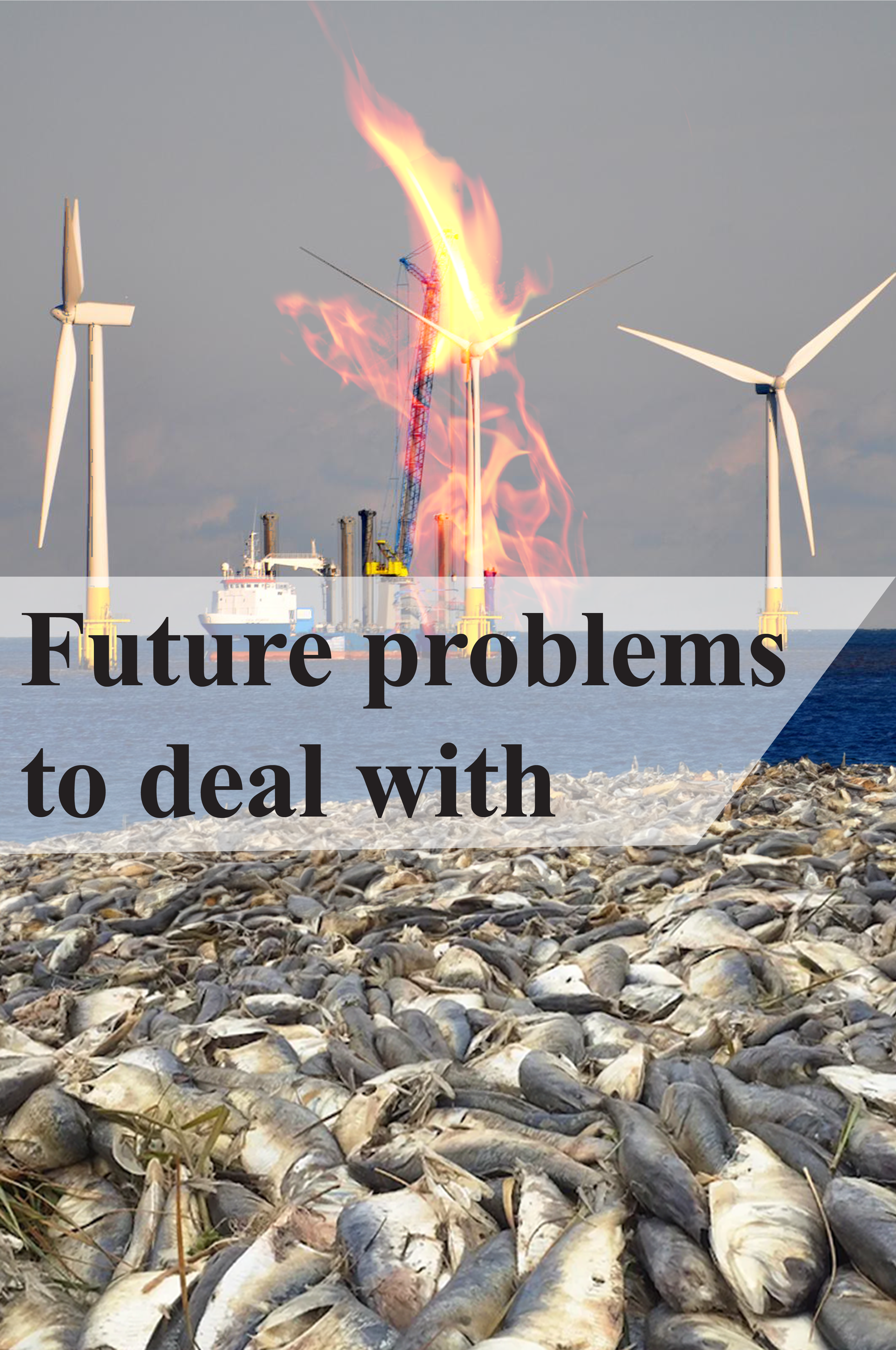
HB 682 acts upon what an abundance of research confirms: wind turbines off the coast make the environment worse, not better. Researchers warn that electromagnetic fields from cables beneath the water lead to defects and deformities of lobster larvae. Young haddock are likewise threatened by magnetic “B fields” that reduce their ability to swim, according to a PNAS Nexus study from 2022. Turbines also raise the sea surface temperature at rates that mimic climate change.
These disastrous effects on ocean life would cause fisheries that rely on a healthy ocean environment to close. And there are practical challenges. As a fisherman myself from Maine, I can attest that running my nets down the ocean floor would become nearly impossible with wind turbines to obstructing the water column, making it difficult to catch enough fish to sustain a business.
In our coastal towns, where you either make a living on the water or know someone who does, HB 682 would be a welcome relief after years of anxiety. It would maintain social and economic growth in communities that rely heavily on the fishing industry’s fleets and where fishing accounts for billions of dollars in economic activity. The port of New Bedford, Massachusetts, for example, supports nearly 40,000 jobs across the region, including many New Hampshire jobs. This is to say nothing of our heritage. Settlers first used Portsmouth harbor as a base for commercial fishing in the early 1600s.
New Hampshire’s neighbors are trying to have it both ways on offshore wind, supporting rapid development of wind farms even as they purport to support fishermen. HB 682’s positive effects on the livelihoods and heritage of New England fishermen cannot be understated. Other coastal states should take note of New Hampshire’s bill on this important issue and use it as model legislation in their local governments. When they do, fishermen all along the East Coast – from Maine to the Carolinas – will once again be able to carry out their trade in peace.
Jerry Leeman is the CEO of the New England Fishermen’s Stewardship Association and former captain of the F/V Teresa Marie.


0 Comments