
Given the high-level fireworks between Maine Governor Janet Mills (D) and U.S. President Donald Trump over the state’s refusal to comply with a White House executive order banning biological males from participating in female school sports, it may be difficult to Mainers to imagine any other political reality than the charged and arguably inflated present moment. Yet many are already measuring the drapes on the Blaine House.
At a far less visible level, and still more the eighteen months into the future, the 2026 mid-term election is already percolating in Maine — not only because the Second Congressional District could become up for grabs but also because the path to the governor’s mansion will be wide open for the first time since 2010. Speculation about who will be jockeying for their party’s nomination in both races has Maine politicos positioning themselves for the klieg lights even at this early stage.
Should Congressman Jared Golden make a run for governor, the geographically vast district he now represents will attract candidates from both parties. But even if he doesn’t, given the close margins by which he won in the last two cycles, Republicans will be gearing up for a challenge that will likely draw national-level resources.
Former Aroostook County state representative and the GOP’s 2024 nominee Austin Thierault is thought to be considering a re-match. Rep. Mike Soboleski (R-Phillips) may also throw his hat into that ring again as well, unless he decides to make a run for governor. If he does, he’ll be joining a field that may become even more crowded as it was fifteen years ago when Paul LePage emerged as the nominee with only 37 percent.
As many as a dozen names have emerged on the Republican side, including two national-level business leaders, the scion of a national political dynasty, high profile state representatives and senators and a handful of other well-known figures who have served in state and national-level offices in past decades. Here is an early list of potential contenders (in alphabetical order) to be the Republican nominee for governor:
Sen. Rick Bennett — a fixture in Maine politics since the early 1990s, Bennett has served in both legislative houses, run for the Second Congressional District, been chairman of the state GOP and worked in the private sector as an advisor to institutional investors. After a hiatus away from Augusta, Bennett returned to to the state Senate in 2020 where he is known for a bipartisan approach that could serve him well in a general election but might prove a challenge in a primary where MAGA Republicans are dominant.
Jonathan Bush — A nephew and cousin of former presidents George H.W. Bush and George W. Bush, and brother of Access Hollywood’s Billy Bush, Jonathan is a businessman now based in Cape Elizabeth who has expressed serious interest in the Blaine House. He founded Athenahealth, a medical billing service based in Belfast, though was pushed out by an activist investor in 2018. Currently he head Zus Health, and in 2014 co-authored the New York Times bestseller “Where Does It Hurt: An Entrepreneur’s Guide to Fixing Health Care.” Like others in his family, Bush is not a Trump fan, which could hurt him with the current GOP base, but he has both name recognition and resources. He has spoken publicly about his intention to dive into Maine politics, with a specific focus on the governor’s chair.

Robert Charles — “Bobby” Charles served in the Reagan administration, and later as an assistant secretary of State for narcotics and law enforcement, as well as a law clerk, attorney and reserve naval intelligence officer who returned home to Maine and lives in Leeds. A staunch conservative, recently Charles was considered as a Republican candidate for attorney general, but under current rules that position is elected by the State Legislature, run by Democrats. Disclaimer: Charles is an occasional op-ed contributor to The Maine Wire.

Peter Cianchette — Businessman, former state representative and U.S. ambassador to Costa Rica under George W. Bush, Cianchette comes from a family with deep roots in Maine Republican politics and large-scale construction enterprises. He ran for governor in 2002 against John Baldacci, and came within just under six points of winning. In 2004, he chaired the Maine state re-election campaign for Bush-Cheney. Currently, Cianchette serves as vice-president of Cianbro, based in Pittsfield.

David Jones — Falmouth-based realtor, Jones is a committed conservative and ardent back of President Donald Trump. He owns F.O. Bailey, one of Maine’s oldest businesses, and is an outspoken critic of the state’s high burden of tax and regulation making it one of the least friendly to private enterprise in America. In 2006, Jones started a gubernatorial campaign but later withdrew from the race. Now he’s a frequent commentator on WLOB talk radio, Southern Maine’s conservative station.

Sen. Jim Libby — Also a 2002 candidate for governor (he lost the nomination then to Cianchette), Jim Libby is a Buxton-based college professor and state senator who is known as an education expert. His name has been floated as a possible candidate, but it is not yet clear whether he wants to make another run for chief executive’s chair.
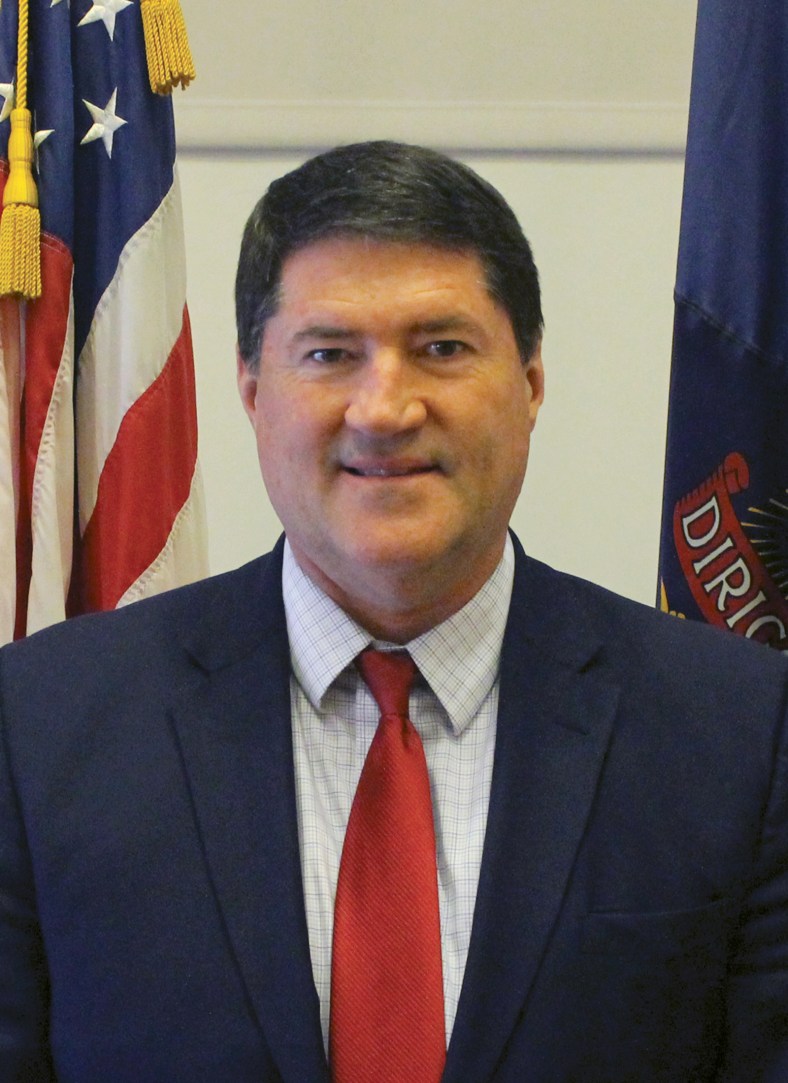
Rep. Laurel Libby — Elected to the State House in 2020, Laurel Libby seen as a fierce advocate against mandatory vaccinations and previously worked as a nurse and interior designer. She is a leader of the Dinner Table PAC, which successfully organized a statewide signature collection effort to put a voter ID question on the ballot this November, and a staunch social conservative. This week, she came under fire from Democrats for posting the photograph of a trans-gender athlete from Greely High School, which caught the attention of President Donald Trump, who on Thursday night declared he’d be cutting off Maine’s federal education spending until the state comes into line with his executive order banning biological males from female school sports. She has been an outspoken state representative, and her issue advocacy has earned her growing name recognition.
Garrett Mason — A former Androscoggin County state senator and Senate majority leader, Mason made a run for governor in 2018. Seen as young and energetic, he is currently a lobbyist and is said to be waiting out whether he’ll make another bid for the nomination to see how the field develops.
Owen McCarthy — A political outsider, McCarthy leads a Portland-based digital therapeutics company called MedRythyms and is an engineer with a Harvard MBA who prides himself on being a problem solver. The son of a third-generation logger, McCarthy grew up in Patten up in northern-most Penobscot County, so has a foothold in that part of the state that is often under-represented in the corridors of power in Augusta. McCarthy is actively exploring the prospect of a run.

Ben Midgely — Recent CEO of Crunch Fitness, founder of 24 Hour Fitness and former executive vice president of Planet Fitness, Midgely is a businessman who started out his career cleaning the machines in a small Maine gym before working his way to the apex of the fitness industry. He’s written a best-selling book outlining his own path to success in business and is one of several prospective candidates whose leading attribute is a background in the private sector.

Shawn Moody — Owner of a chain of collision-repair centers, Moody can make a case for fixing broken things which arguably include Maine’s state government. As the GOP nominee who challenged now incumbent Governor Janet Mills in 2018, Moody was seen as likable and honest with a common-sense approach to politics. While he’s not declared his intention, his name has been mentioned by political insiders as a prospective candidate.
Bruce Poliquin — Former Second District congressman and state treasurer under Governor Paul LePage (R), Poliquin returned home to Maine after a successful career on Wall Street. After losing to Jared Golden because of the ranked choice method of vote tabulation (Poliquin actually won more votes outright, but because neither he nor Golden surpassed 50 percent, the RCV process of counting second choices was put into play for the first time ever in Maine in 2018), Poliquin ran again in 2022 and again the race went to an RCV tabulation, but having won the initial plurality, Golden went on to cinch another term. It remains to be seen if Poliquin wants to potentially face off against Golden again, this time statewide.

Rep. Michael Soboleski — Since first getting elected to represent his Western district in Augusta in 2022, Soboleski has been an active legislator pushing for solutions to budget, workforce and infrastructure issues with the determination of a former Marine. In fact, when NASCAR driver Austin Thierault beat Soboleski for the 2nd CD nomination last year, Golden trolled the GOP nominee by saying he was glad he didn’t have to run against fellow Marine Soboleski. Mike has shown organizational chops in running the Maine Census in 2019, has been an actor on the hit TV show Law & Order, and was a first responder in New York City on 9/11. He is thought to be eying either another run for Congress, or governor.

Sen. Trey Stewart — A one-time aide to former Congressman Poliquin, Presque Isle-native Stewart has been the youngest member of both the Maine House and Senate, where he is currently minority leader and spokesman for Republicans in the upper chamber. While serving in the legislature, he’s earned both and MBA and a law degree, demonstrating an ability to multi-task. It remains to be seen whether he’s ready to make a move towards the Blaine House yet, but his current role gives him a bully pulpit should he choose to do so.

So far, there is only one declared candidate: former Paris selectman Robert Wessels, who has already launched his 2026 campaign website.
Who’s definitely not running? Last week, The Maine Wire speculated that Purple Heart awardee, quadruple-amputee and motivational speaker Travis Mills was considering a bid based on a Facebook post the highly-regarded advocate for wounded veterans had made earlier the month musing aloud on the question, but that possibility no longer seems imminent.
Conservative talk-radio host Ray Richardson has a large following in Maine and has also long spoken openly about his interest in making a run, but told The Maine Wire he is committed to keeping his WLOB program on the air and streaming for now so will not be running next year.
Even if only half these prospective contenders actually launch candidacies in earnest, it would still be a crowded field. What is just as important to the landscape as which Republican will run is who will the Democrats field — and will there be a viable Independent in the race, given that unaffiliated candidates have twice won in Maine (Jim Longley in 1974 and Angus King in 1994 and 1998, not to mention the spoiler role subsequently-convicted pedophile Eliot Cutler played in 2010 and 2014).
The recent election of Leeds lawyer Charlie Dingman as the Democratic Party’s state chairman points to a possible power play by those supporting a state-wide run for Jared Golden — the two grew up in the same town and are considered close allies. So if it’s a given Golden is going to make a run, against which other Democrats might he be competing?
Chances are good there will be a Pingree in the race, the only question is whether it is the mother, Congresswoman Chellie Pingree, or the daughter, Hannah, who has been speaker of the Maine House and currently heads Governor Mills Office of Policy Innovation and the Future (GOPIF).
Conventional wisdom has suggested that it is now Hannah’s turn — indeed Governor Mills called the younger Pingree out for special praise during her State of the Budget address earlier this month. But since President Donald Trump took office four weeks ago, the largely AWOL congresswoman suddenly became more prevalent, appearing almost daily in the media after years of an at best virtual presence. The elder Pingree has not sought statewide office since losing her challenge to U.S. Senator Susan Collins in 2002.
Then there is Secretary of State Shenna Bellows, whose putative claim to being a Trump-slayer notches a little higher than Congresswoman Pingree’s thanks to her effort to strike the Republican presidential nominee’s name from the Maine ballot last year, which was only later thwarted by the meddlesome U.S. Supreme Court.
Finally, there is still talk among establishment Democrats that former Aroostook state senator and majority leader Troy Jackson, who was term limited after the last legislative session but faced controversies in 2023 related to his residency claim and lost a recount for a local select board seat in Allagash, will launch a run. Others have dismissed the viability of his candidacy, suggesting Jackson has passed his expiration date.
Despite her current flap with Trump over trans-gender athletes in Maine school sports, Mills is considered, by Democrat standards, a centrist. Golden comes closest to carrying that mantle into the 2026 gubernatorial race and has been hesitant to publicly criticize the president, who won his district last fall. Bellows and either Pingree would compete for the leftist activists who may be most likely to turn out in a Democrat primary.
By November 2026, employers throughout the state will be fully feeling the additional pain of Paid Family and Medical Leave payments and the state budget will likely be further strained by steadily increased spending over the last seven years. This environment could provide an opening for a pro-business candidate with a credible plan for shrinking public spending and making the state more hospitable to the kind of well-paying jobs in search of which young Mainers flee southward every year.
For Mainers who ever since the COVID-19 lockdowns may have felt either a sense of the Stockholm Syndrome or cabin fever with the two-terms of Gov. Mills, imagining anything else may seem strangely unreal. But the clock is already ticking.



Ahh… You folks ever hear of Wessells? Apparently NOT! Or did I MISS his name on your list???