In a meandering and at times pedantic speech Tuesday night, Gov. Janet Mills (D) defended her proposed FY 26-27 spending plan, painted the state of Maine’s economy as glowing and growing, and assailed critics of her plan to raise taxes on cigarettes.
“I am proud to report to you that Maine’s economic growth is outpacing the national average, including the rest of New England, and it’s outpacing even large states like New York and California,” Gov. Mills told lawmakers.
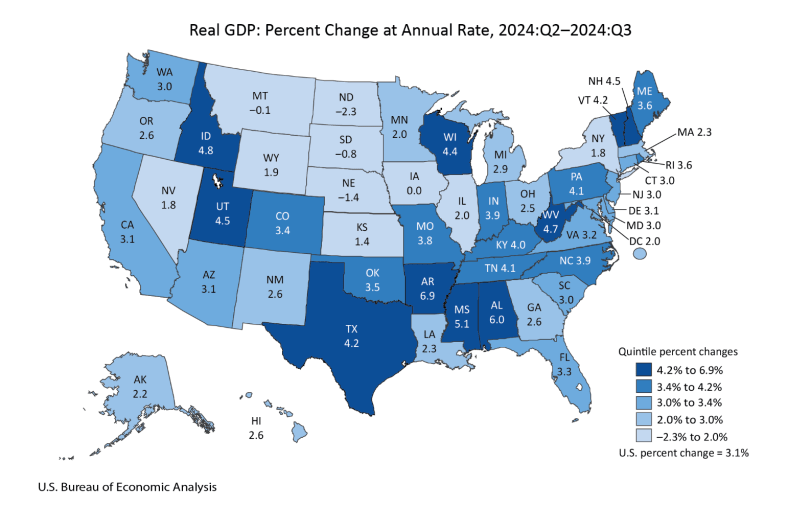
“In fact, over the past six years, in spite of the pandemic, Maine has experienced more economic growth than it did in the entire fourteen years before I took office,” Mills said, without specifying what measure of growth she was relying upon for the claim.
As Mills addressed a less-than-packed House chamber, protesters filled the second floor of the State House building, holding signs with various messages indicating their displeasure with the Mills Administration.
According to multiple protesters present for the speech, the governor booked all of the seating in the chamber’s upper gallery in advance, so no demonstrators were allowed in to watch the speech itself. In addition, the governor used a side entrance to enter the chamber to avoid walking through the peaceful protesters.
Describing Maine’s economy as robust and growing, Mills boasted of low unemployment and credit upgrades under her leadership. However, she also acknowledged the current budget crisis facing Augusta.
As her administration has previously disclosed, Maine’s economists are forecasting a $470 million shortfall in proposed spending versus projected revenue for the FY 2026-2027 biennium, as well as a $118 million deficit in current-year MaineCare spending.
To close that gap, Mills has proposed tax hikes, including a controversial $1-per-pack increase on cigarette taxes, adjustments to cannabis taxation, and new fees on ambulances and pharmacy prescriptions.
The shortage of funding for MaineCare, a medical welfare program, is so severe that the Mills Administration has threatened to stop payments to Maine’s medical providers if lawmakers do not come up with a way to address the deficit by the spring.
While the nearly half-a-billion-dollar structural deficit will have to be addressed in a large two-year budget deal, Mills and Democratic lawmakers are looking to fund the welfare deficit with a supplemental budget bill that will likely be a top priority for the 132nd Legislature.
Mills attempted on several occasions to cast herself as the voice of moderation between far left Democrats and conservative Republicans, but she consistently blamed Republicans for problems in state government, despite the GOP holding legislative minorities for her entire time in office.
In fact, Mills and her Democratic allies pursued a Democrats-only spending bill in the last legislative session and have signaled their intent to do so again this year, meaning Republicans have had little say over the most significant aspects of funding and operating state government for more than four years.
Even as she inveighed about bipartisanship and collaboration, Mills leveled sharp partisan barbs at Republican lawmakers, describing them as callous toward the health and economic needs of low-income Mainers. In one of the most acrimonious and nasty moments of the address, Mills seemed to suggest that Republicans want to encourage poor people to smoke cigarettes while simultaneously cutting their health care.
When Mills released her budget plan, the single largest tax increase by revenue was the tobacco tax, which House Minority Leader Billy Bob Faulkingham (R-Winter Harbor) labeled as a tax increase on poor people.
Cigarette taxes, often referred to as sin taxes, are regressive taxes in that they are primarily paid by lower-income individuals who are more likely to smoke. Faulkingham’s criticism must have struck a nerve with the governor because she spent a fair portion of her address defending the tax increase, changing her messaging on the tobacco tax, and attacking Republicans.
Although sin taxes are often advocated as attempts to modify human behavior in a manner that the government deems more appropriate, Mills’ original budget proposal and press materials made no mention of her cigarette tax as a public health initiative and instead cast the measure purely as a revenue-generation tool. The governor changed her tune Tuesday night, implying that she’d proposed the measure for health reasons rather than to extract more tax dollars to fund gaps in the state’s spending plan.
Responding to GOP criticism that her tax would harm poor smokers, Mills suggested Republican opposition to her tax increase plan wasn’t based on economic concerns or concerns over the tax increase’s impact on low-income Mainers, but rooted in a desire to make smoking a cheap habit.
“I understand your concern about the impact on low-income people and that, really, you would like to make it as cheap as possible for people to smoke,” Mills said.
“If that is the case, I would simply ask in return that you not also try to cut the very health care services these same folks are going to need due to smoking,” she said. “Because that is what you are doing when you look at cutting Medicaid.”
Immediately following the address, Republican leaders issued a harsh rebuke of the governor, accusing her of taking credit for programs that were created by the legislature with little involvement from the executive branch, including programs that the governor is now seeking to defund.
“The governor lied flatly when she said she wasn’t going to raise taxes,” said Senate Minority Leader Trey Stewart (R-Aroostook), referring to the governor’s campaign promises not to raise any taxes.
“She could dress it up as much as she would like during her speech and her poetry and whatever. Doesn’t change the fact that she lied,” Stewart said.
“There’s a dozen new taxes in this [budget proposal] that you just heard talked about and, you know, very elegant language, that’s fine, but it doesn’t address reality,” said Stewart. “Reality is that Maine people, Maine families, are struggling. This budget doesn’t do anything to address that. The reality is that we’re already overtaxed one of the most taxed states in the country. This makes that worse, and we have a real spending problem that we haven’t addressed in this document.”
Faulkingham reiterated his earlier criticism of the governor’s proposed tax schemes as disproportionately aimed at the poorest Mainers.
[COMMENTARY: The State of the Budget: Bad. Why? Mills….]
“She came out there and presented a whole bunch of taxes on Maine people, taxes that will predominantly target poor and middle class people,” said Faulkingham.
“Nobody likes this budget. Simple as that. It’s got a tobacco tax, it’s got a cannabis tax, it’s got a streaming tax, it’s got a pension tax, on and on and on,” he said. “She talked a lot about things that we already support. You know, the 55% education [funding], [municipal] revenue sharing. It’s nothing to pat yourself on the back about to keep doing what we already do.”
Both Stewart and Faulkingham reiterated Republican lawmakers commitment to oppose any supplement or two-year budget proposal that further raises taxes.
“We are not in the business of raising taxes on poor people who are already struggling,” said Faulkingham.
Stretching for other accomplishments to tout, Mills also referred to past spending, including direct payments to Mainers in the form of relief checks and expanded property tax benefits. She claimed such investments had been necessary to support residents struggling with rising costs of living.
Although Mills identified the rising cost of living and inflation as major problems for Mainers, she didn’t introduce any plans to reduce the cost of electricity, which has been a persistent and increasing source of operating costs for Maine businesses and homes. Notably, Mills did not mention in her speech her administration’s long-running support for offshore wind and community solar, two green energy initiatives which have contributed to driving up the cost of electricity in Maine.
On public safety, Mills reiterated her commitment to Maine’s controversial ‘Yellow Flag’ law, which allows police to temporarily confiscate firearms from individuals deemed a risk to themselves or others. She defended the law’s role in preventing gun violence, though conservative lawmakers worry about its implications for due process rights.
The Maine Wire streamed the governor’s address last evening across social media and reacted live after. You can watch the after show here:


0 Comments