
A new trend sweeping Maine schools has parents concerned about the lack of transparency surrounding medical treatments — including sex-change related treatments and mind-altering prescription drugs — their children might be receiving without their knowledge or consent.
The latest battleground is the Gardiner area school system, where school officials are looking to create a so-called “school-based clinic” — that is, a fully functional medical office colocated with a public school.
Maine School Administrative District 11, which includes Gardiner, West Gardiner, Pittston, and Randolph, is currently reviewing a contract that would create medical office within the schools capable of prescribing drugs to teens.
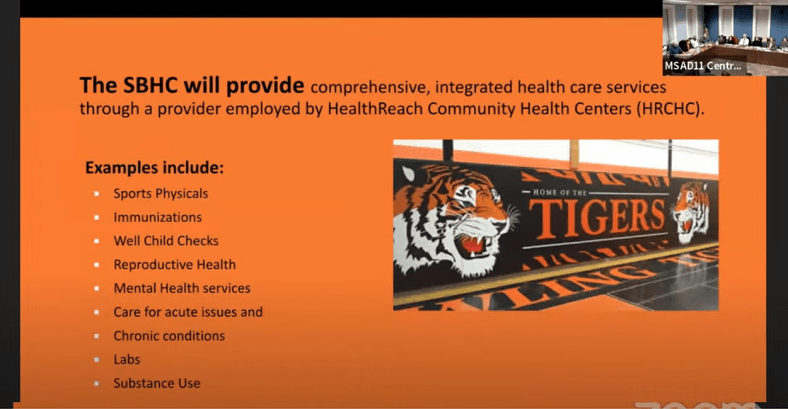
Like the other more than 30 school-based clinics operating in Maine schools, Gardiner’s proposed clinic would be inside the school, might lease space from the school, and might even be branded as if it’s officially part of the school.
But technically and legally, the school-based clinics are always separate entities, and that’s an important detail in how they operate and why some parents are concerned about the lack of transparency and accountability.
In theory, the school-based clinics are taxpayer-funded nonprofits that allow Maine’s youth to receive medical care they might not otherwise be able to access.
In practice, the clinics create a conduit for minors to receive medical treatments and prescription drugs without their parents’ knowledge or consent, including controversial treatments like antidepressants or off-label prescriptions for cross-sex hormones and puberty blockers.
Should a parent complain to the school’s superintendent, principal, or school board, those administrative officials have plausible deniability for anything occurring within the clinic.
After all, it’s a totally separate entity and HIPPA protections apply.
Similarly, the clinic’s leadership can rely on patient confidentiality rules to avoid answering any questions.
In addition to the Bulldog Health Center at Lawrence High School, there are school-based clinics operating in RSU 17 (Oxford Hills), AOS 93 (Lincoln County), RSU 40 (Union), CSD 3 (Boothbay), RSU 1 (Morse), RSU 12 (Wiscasset), RSU 34 (Old Town), the Portland Public Schools, Westbrook, RSU 67 (Mattanawcook), RSU 22 (Hampden/Winterport), Lee Academy, and Brewer.
Many of the clinics in Maine are operated by tax-advantaged nonprofits, ranging from large nonprofit hospitals to smaller, more specialized providers.
Although the school-based clinic controversy in Gardiner has attracted some local and national media attention, less attention has been paid to the nonprofit looking to operate the clinic — HealthReach Community Health Centers.
Healthreach was the subject of a previous Maine Wire report after its Bulldog Health Center — the school-based clinic it operates out of Lawrence High School — sent a minor child home with a bag of unlabeled pills.
The pills, later discovered by the child’s father, Eric Sack, turned out to be Zoloft, a prescription anti-depressant.
Sack, in an attempt to figure out why a school-based clinic would send his minor child home with a baggy full of unlabeled pills, quickly encountered the lack of transparency and accountability that’s built in to the school-based clinic model.

Sack said that he contacted Lawrence High School Principal Dan Bowers, but Bowers declined to comment because the “Bulldog Health Center” is, on paper, a separate entity from the school.
Bowers subsequently refused to respond to the Maine Wire’s inquiries.
When Sacks contacted representatives from the Bulldog Health Center, he said that a representative told him they were legally allowed to give his daughter prescription drugs without informing him, but they wouldn’t address the lack of a label or safety container.
Like Bowers, the Bulldog Health Center and HealthReach declined to respond to the Maine Wire’s inquiries.
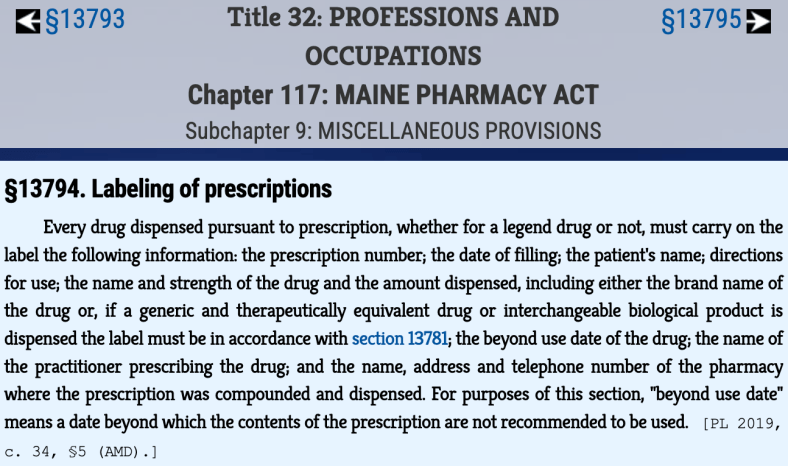
Pharmacists and healthcare providers are required to label dispensed medications with specific information as outlined in Title 32, §13794 of the Maine Revised Statutes.
It’s unclear why the Bulldog Health Center failed to follow Maine’s rules for the provision of prescription drugs and instead gave the teen girl a bag of unlabeled pills.
Failure to comply with these labeling requirements can result in disciplinary actions by the Maine Board of Pharmacy, which may include fines, suspension, or revocation of professional licenses.
If the Bulldog Health Center — or HealthReach — were to lose their license to issue teens prescription drugs, that might constitute a massive financial blow.
Tax documents filed by HealthReach suggest that nearly 40 percent of the organization’s total program revenue in 2023—$11.7 million—came from its prescription drug program, with an additional $6.9 million coming in the form of government grants.
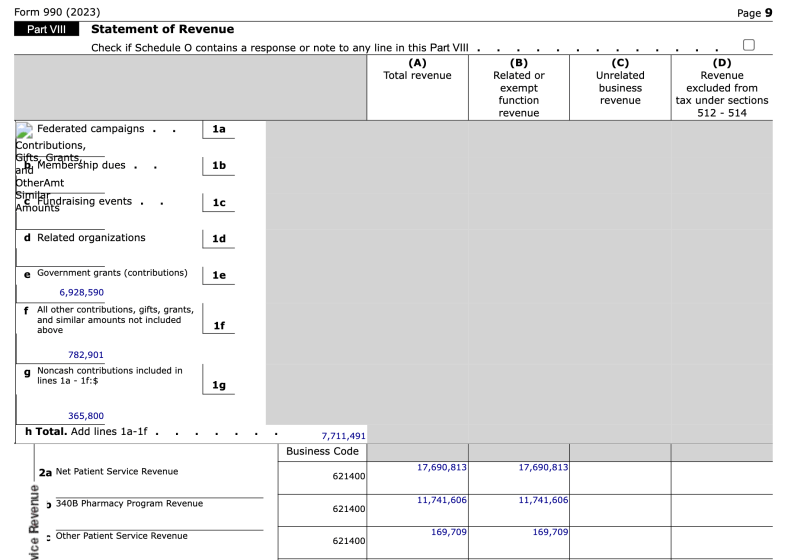
The organization only began reporting its prescription-based revenue as a separate line item in 2021.
In that year, HealthReach earned $7.8 million from its “Pharmacy Program,” or approximately 33 percent of its total program revenue.
In the two-year period from 2021 to 2023, HealthReach increased its total revenue from prescribing drugs by $3.9 million.
Although HealthReach operates several clinics throughout Maine, the period from 2021 to 2023 just so happens to coincide with the first two years of operation for its school-based clinic in Lawrence, which was opened in 2021.
At the same time HealthReach has grown its prescription drug-based revenue, salaries for its top-paid employees have grown well beyond the median salary for a nonprofit employee in Maine.


More recently, the Bulldog Health Center has been featured in Daily Signal reporting that showed photos from inside the clinic — which is physically located within the school.
The photos show a clinic adorned with the quasi-religious symbols of gender ideology, including the “pride progress flag.”

Those photos have only stoked parental concern that the clinics will place gender ideology — and prescription drug revenue — over the well-being of students.


0 Comments