
Maine Governor Janet Mills’ (D) Office of Policy Innovation and the Future (GOPIF) has granted $15,000 to a Portland-based consultant to coordinate a study of the potential effectiveness of “harm reduction health centers,” also known as safe drug consumption or injection sites.
In July of last year, Gov. Mills signed LD 1364 into law, a resolution which directed GOPIF to “convene a working group to study methods of preventing opioid overdose deaths by authorizing harm reduction health centers.”
The bill as originally introduced would have authorized municipalities to open the so-called “harm reduction health centers” as facilities where individuals could go to use previously obtained controlled substances without fear of arrest.
That version of LD 1364 was rejected by the Maine Senate, and the bill was replaced by a resolution to instead convene a working group to “evaluate options for, identify barriers to and develop findings and recommendations regarding the prevention of opioid overdose deaths by authorizing harm reduction health centers in the State.”
The State Legislature appropriated $15,000 to fund the study, which became available on July 1, 2023.
According to a Procurement Justification Form (PJF) published by the Mills administration on Sept. 6, GOPIF will direct the $15,000 to Carol Kelly, managing director of Pivot Point, Inc., to facilitate the working group’s study into the harm reduction health centers.
Kelly’s role in the working group, according to the Mills administration, will be to conduct interviews, engage stakeholders, coordinate research, facilitate monthly meetings, synthesize the meeting notes and assist in drafting the group’s final report.
Kelly previously served as a lead consultant and writer of Gov. Mills’ Maine Opioid Response Strategic Action Plan.
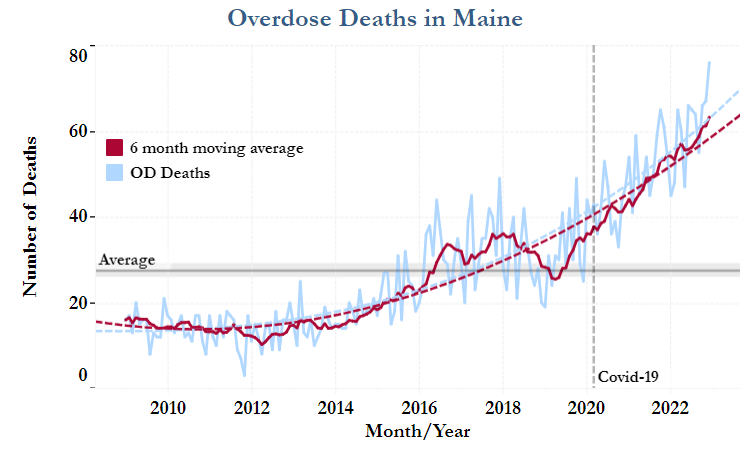
According to the most recent data from the University of Maine’s Drug Data Hub, there were a total of 302 overdose deaths and 4,980 nonfatal overdoses in Maine from January through July of 2024 — a more than 10 percent decrease in both fatal and nonfatal overdoses from the same period last year.
That said, the data shows that the number of fatal overdoses in the state remain significantly higher than prior to the COVID-19 pandemic.
The working group’s report to the legislature is due on Feb. 15, 2025, and will include findings and recommendations, including any proposed legislation for the 132nd Legislature.


0 Comments