
Maine’s ongoing effort to resettle non-citizens will get a $5.4 million boost thanks to a Biden-Harris Administration grant that will provide taxpayer dollars to house, feed, and provide other services to migrants recently released from U.S. Department of Homeland Security (DHS) custody.
On Wednesday, Aug. 28, DHS, alongside the Federal Emergency Management Agency (FEMA) and U.S. Customs and Border Protection (CBP) announced that they had allocated over $380 million in grants nationwide to support the federal Shelter and Services Program (SSP).
Last week’s slate of SSP grants comes in addition to nearly $260 million distributed by the DHS through the program in April, bringing the total spending on the program for fiscal year 2024 to about $640 million.
The United Way of Southern Maine, which partners with Catholic Charities Maine to provide services to migrants, was allocated $5.4 million through the second tranche of fiscal year 2024 SSP grants, on top of the $255,000 the nonprofit received through the program earlier this year.
“Our community’s most vulnerable members face the interconnected challenges of food insecurity, housing instability, and lack of transportation,” said Liz Cotter Schlax, President and CEO of United Way of Southern Maine in a press release.
“United Way is grateful to be able to access these Federal resources on behalf of our neighbors and the organizations serving them directly,” Schlax said.
According to publicly available tax filings, both the United Way of Southern Maine and Catholic Charities of Maine receive significant percentages of their funding from taxpayers while paying high salaries to top executives.
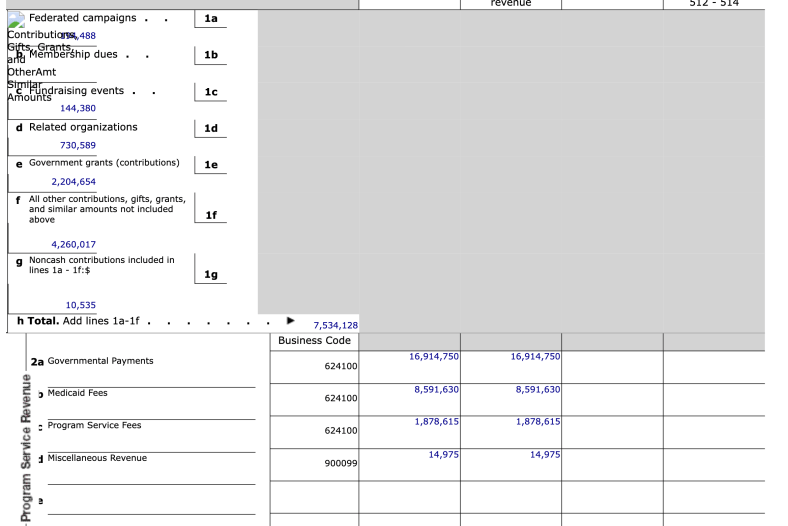
In 2022, the recent year for which its Form 990 is available, Catholic Charities of Maine received $2.2 million in government grants. The migrant resettlement organization took in another $16.9 million in government payments — likely payments for migrant services — as well as $8.6 million for Medicaid services offered to clients of the organization, including migrants.
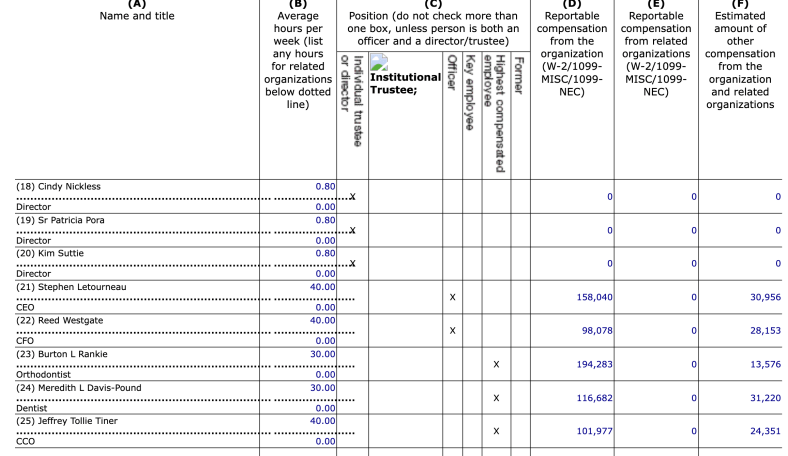
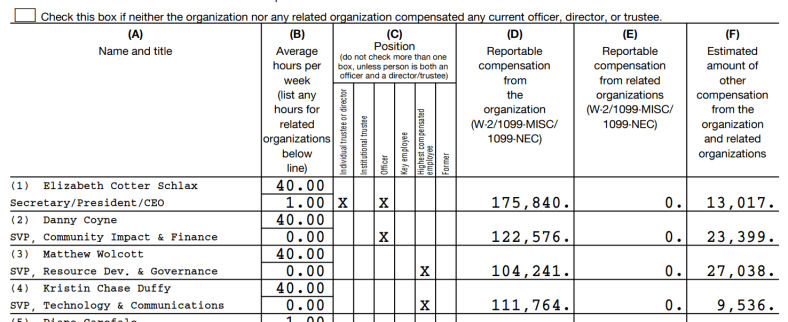
The United Way of Southern Maine received $2.9 million in government grants, according to its most recent Form 990 tax filing. According to the tax document, Schlax, the CEO of the migrant resettlement group, earned $188,857 in that year.
Administered by FEMA, SSP allocates taxpayer dollars to non-federal entities, such as state and municipal governments and nonprofit organizations, to fund housing, food, clothing, medical care, transportation and other services for noncitizen migrants.
The program is operated in coordination with CBP in order to prevent the overcrowding of short-term holding facilities along the borders of the U.S., which are used to detain and process apprehended migrants — either for admission into the country, expedited removal, or for a referral to an immigration judge to commence removal proceedings or adjudication of a migrant’s asylum claim.
According to data from the Syracuse University Transactional Records Access Clearinghouse (TRAC), as of July 2024 there was a backlog of over 3.7 million active cases before U.S. immigration courts, with about 1.5 million of those pending cases being for asylum hearings.
Currently, non-federal entities are only allowed to use the SSP funds on services to migrants within a 45-day period after the migrant is released from DHS custody.
In December 2023, U.S. Senators from Maine Angus King (I) and Susan Collins (R), alongside Democratic Congresswoman Chellie Pingree (ME-01), wrote a letter to President Biden’s DHS Secretary Alejandro Mayorkas requesting that the 45-day limitation on SSP funding be extended to 180 days.
King, Collins and Pingree argued in their letter that the 45-day restriction is “inappropriate for migrant destination locations like Maine.”
“Maine immigrant services groups struggle with the 45-day limitation because migrants arriving in the state have typically been released from DHS custody many days prior, reducing the period in which these individuals and families may receive support,” the members of Maine’s congressional delegation wrote.
Speaking on the House floor in June, Rep. Pingree advocated to move $600 million from the construction of border fencing to pay for more migrants to be bused into Maine, and to pay for migrant housing and expenses through the FEMA program.
Pingree said in her remarks that the SSP funding “moves people from the congestion at the border to cities all over our country, and it is a way to support that going on.”
“So as far as I’m concerned, this is just a common sense way to deal with the number of asylum seekers who want to come into our country today, and we should continue to support it,” Pingree added.
Rep. Pingree has also introduced legislation that would reduce the current 180-day waiting period for asylum-seeking migrants to apply for work authorization to 30 days.



0 Comments