
Maine’s Democratic members of Congress, Jared Golden and Chellie Pingree, supported a $500,000 taxpayer-funded “environmental justice” grant for a left-wing activist group — the same group that’s now offering to pay $21 per hour for left-wing activists to canvass Maine’s Second Congressional District from now until the Nov. 5 elections.
On Oct. 25, 2023, the U.S. Environmental Protection Agency (EPA) announced a tranche of $3.5 million in grants that were awarded to six projects in Maine geared towards advancing “environmental justice.”
The funding for the grants came from President Joe Biden’s 2022 Inflation Reduction Act — which authorized more $400 billion in spending on a broad range of activities tied to energy and climate change initiatives.
The EPA stated that the six projects were selected to “ensure disadvantaged communities that have historically suffered from underinvestment have access to clean air and water and climate resilience solutions in alignment with the Biden-Harris administration’s Justice40 Initiative.”
The Justice40 Initiative originates from an executive order signed by President Biden shortly after his taking office which sets a goal of 40 percent of certain federal investments being directed to “disadvantaged communities that are marginalized, underserved, and overburdened by pollution.”
Among the organizations awarded funds by the EPA was the Maine People’s Resource Center, the 501(c)(3) nonprofit arm of the Maine People’s Alliance, a progressive activist and lobbying organization that pushes left-wing causes in Maine.
Although the two groups appear separate on paper, they share staff, office space, and support for progressive policies and Democratic politicians.
The joint 501(c)3 / 501(c)4 arrangement allows for the activist group to benefit from a (c)3 status, such as by accepting government grants and tax-deductible donations, while maintaining the freedom to spend large sums of money directly influencing politics via the (c)4 arm.
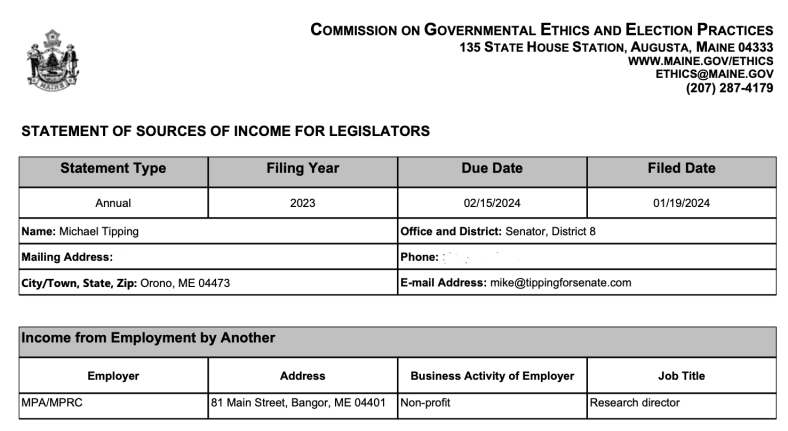
In campaign finance filings, State Sen. Mike Tipping (D-Penobscot), a longtime employee of the organization, even acknowledged the lack of a distinction between Maine People’s Alliance and Maine People’s Resource Center when he reported a single entry for “MPA/MPRC” on his income disclosures.
The implication of the half-a-million dollar taxpayer-funded grant flowing to the organization is that taxpayers are now effectively subsidizing the left-wing activists who are working to elect Democrats, including Golden and Pingree, in the 2024 elections.
The Maine People’s Alliance is actively running advertisements on Craigslist seeking paid political canvassers to operate in the Second Congressional District around Bangor.
“MPA will have thousands of conversations in our communities between now and Election Day about issues that matter most to Mainers,” the job listing states. “If you want to make an impact during a critical election year, this is the team to join!”
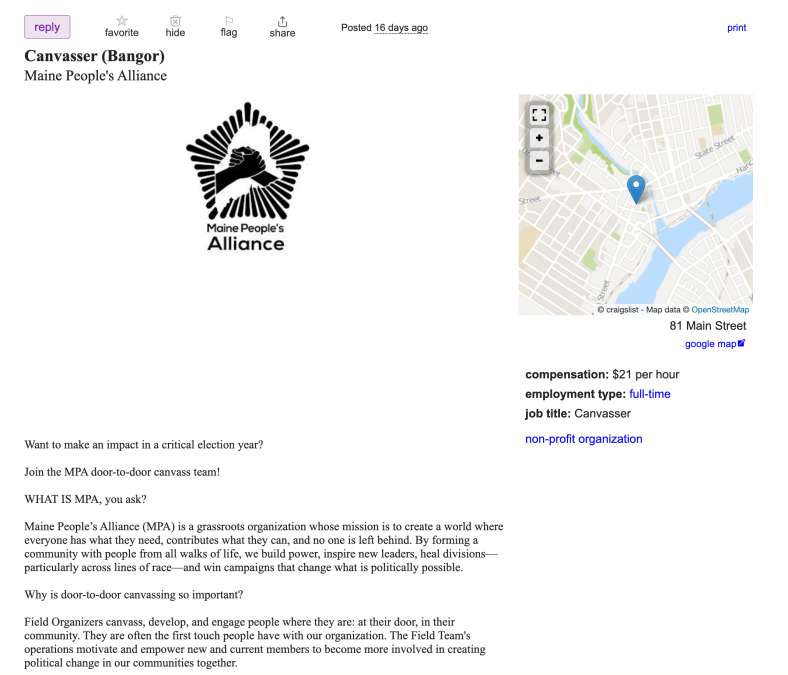
At a rate of $21 per hour, the $500,000 from the EPA will go a long way toward sending activists throughout northern and central Maine to bang the drum for Democratic candidates.
The Maine People’s Alliance network has also received millions of dollars in funding from the progressive dark-money network run by the Washington, D.C.-based company Arabella Advisors.
Funding from the left-wing billionaires behind Arabella has fueled the Maine People’s Alliance’s lobbying for a host of progressive policies, including providing drivers licenses and Medicaid to illegal aliens in Maine, decriminalizing hard drug possession, and expanding taxpayer-funded welfare for migrants. The organization has also been a longstanding voice in favor of higher taxes in Maine despite the state’s distinction as the fourth highest taxes state in the Union.
According to federal spending records, the EPA awarded the Maine People’s Resource Center $500,000 to lead a workforce development program aimed at recruiting “marginalized populations in underserved communities” into “clean energy career[s].”
Pingree and Golden both joined Sen. Angus King (I) in backing the spending bill, while Republican Sen. Susan Collins voted against.
Although it’s unclear how directly Golden and Pingree were involved in directing the taxpayer-funded grant to the same political activists who back Democratic causes and candidates in Maine, both politicians applauded the EPA for awarding the “environmental justice” grant to the progressive activist group in October.
“Keeping Maine’s environment healthy not only benefits our great outdoors, but also strengthens our local communities and businesses,” Congressman Golden said of the EPA grants.
Golden said the federal spending “will boost severe weather resilience, reduce pollution, and improve food security for families all across the Second District.”
Even before the controversial grant to the Maine People’s Alliance’s (c)3 came to light, the Inflation Reduction Act had become a flashpoint in the Second Congressional District race.
State Rep. Austin Theriault (R-Fort Kent), the Republican challenging Golden, has argued that Golden’s vote in favor of the spending bill is an example of the Democrat taking both sides of several major issues, especially the role of government in promoting “green” energy.
While Golden, like Theriault, opposed a state-level scheme to mandate EV sales in Maine, Golden also backed the Inflation Reduction Act’s generous subsidies for EVs and EV charging stations. A major part of then bill awarded sizable tax credits to consumers who purchased the battery-powered vehicles.
“Flip-flopper Jared Golden has supported the Biden/Harris economic agenda for years, and Mainers are worse off for it,” Theriault said in a statement earlier this month.
“Instead of cutting pork barrel policies and closing the border to end the spending spree Washington is on, Golden is abandoning Mainers by voting for more Green New Scam policies and the laughably named Inflation Reduction Act that hurt Mainers and destroyed our economy,” Theriault said.
Golden doesn’t appear to be backing away from his support for the spending bill, preferring instead to focus on the smaller provisions in the package that relate to Medicare Part D prescription drug pricing.
Just last week, on the two-year anniversary of the Inflation Reduction Act being signed into law, Golden reaffirmed his support for the legislation, writing on X that the law is “delivering for Mainers” and lowering prescription drug costs.
Many of the Medicare related items from the Act, including price caps on prescription drugs for seniors, have yet to take effect.
This summer, Medicare insurers actually proposed premium increases in response to costly provisions in the bill, leading the Biden-Harris Administration to pull an unorthodox move to prevent notices of those price increases from hitting seniors’ mailboxes too close to the election.
The maneuver will effectively see the White House transfer an estimated $5 billion in tax dollars to the insurers to prevent those notices from going out.
Congresswoman Pingree, ranking member of the House Appropriations Interior, Environment, and Related Agencies Subcommittee, also praised the slate of grants and said that “Mainers from the coast to the mountains are already experiencing the impacts of climate change.”
“As the Gulf of Maine warms and more frequent extreme weather events affect our fisheries, farmers, and businesses, federal investments are critical to not only mitigating the climate crisis but making our communities more resilient to its impacts,” Pingree said.
“From strengthening working waterfronts and developing a clean energy workforce to improving environmental public health and advancing environmental justice, these significant investments made possible by the historic Inflation Reduction Act will go a long way in helping our overburdened communities and will also help Maine achieve our climate goals,” Pingree added.
Democrats at the state level have enthusiastically supported the Inflation Reduction Act and the torrent of taxpayer cash that has come to the state to bankroll a litany of climate change-related initiatives.
In April, Maine Gov. Janet Mills’ (D) Energy Office announced that it had applied for nearly $72 million in Inflation Reduction Act funds aimed primarily at providing rebates for homeowners in the state to install heat pumps.
Efficiency Maine, the quasi-governmental organization that oversees several climate change-related tax incentive and rebate programs, such as subsidies for purchasing electric vehicles, has said that the Inflation Reduction act funds are not yet available, but are expected to come this fall.



0 Comments